BRIGHT VALLEY TAKES SHAPE
Paul Costa talks with Human Habitats about the public realm vision.Bright Valley is much more than a place to live. Deague Group has invested heavily in the public realm, bringing new green spaces, pathways and outdoor recreation areas that will add to the everyday rhythm of life for residents and contribute to the parks and open spaces of Bright itself. Human Habitats have shaped the landscape and public realm, as well as house designs, through the respected planning practice behind some of Australia’s most people-focused environments. We spoke with practice director Darren Atkinson about his vision for Bright Valley and the features that will help define its outdoor spaces.
Stage One of the homes at Bright Valley has sold out, so clearly your modern alpine style has resonated with people. How does it feel to see your design work embraced?
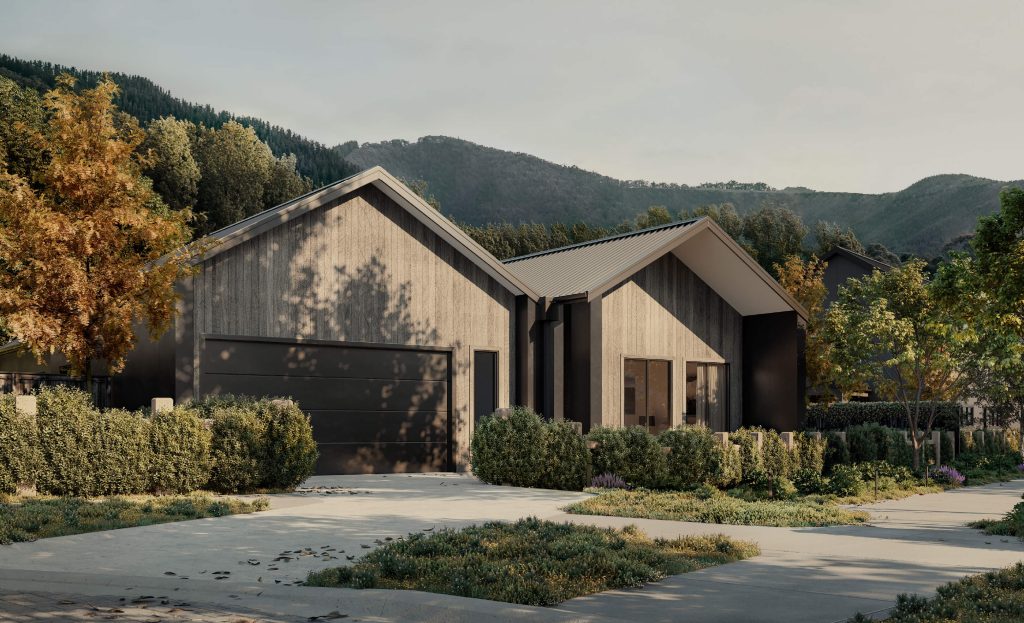
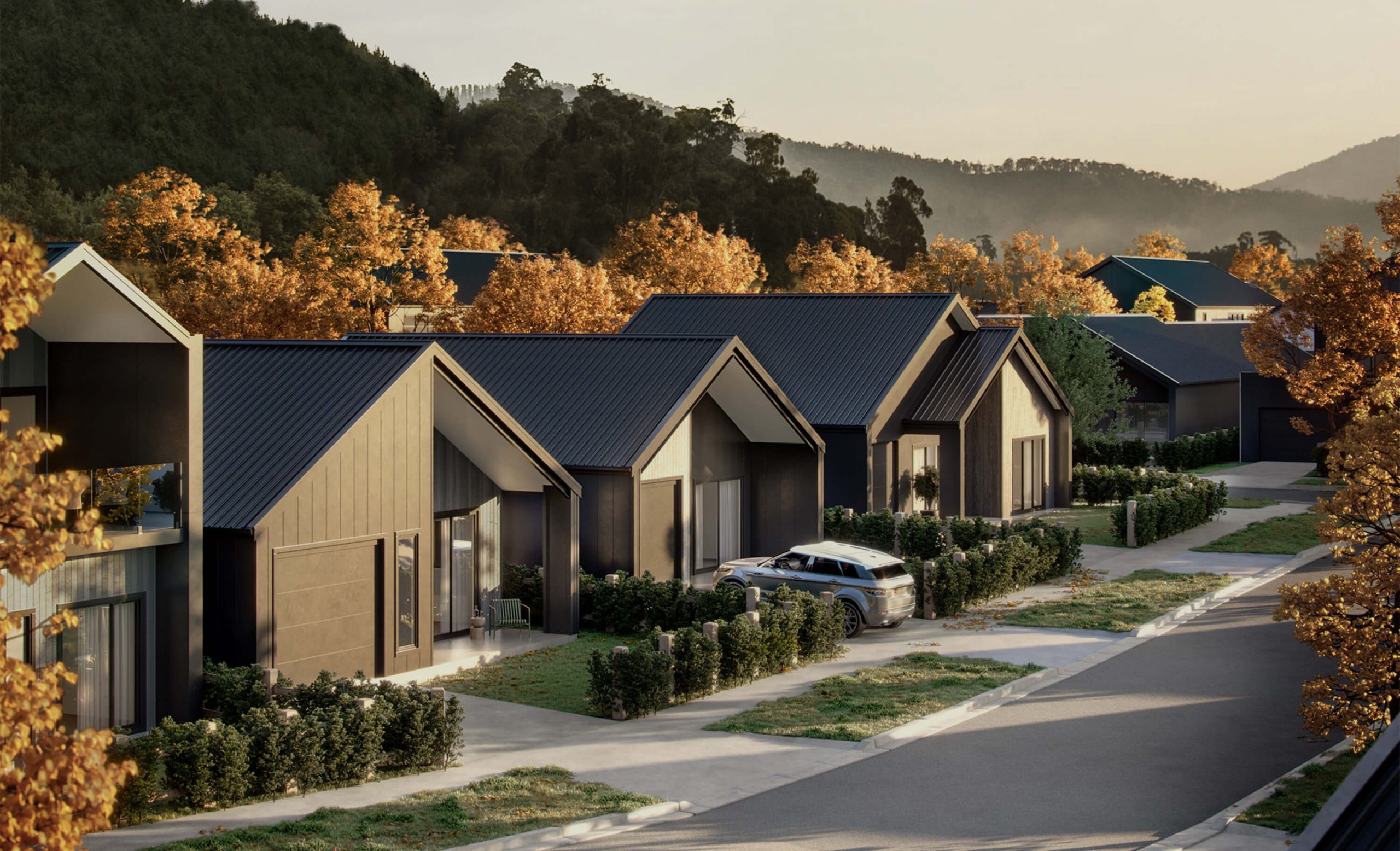
Seeing Bright Valley come to life has been incredibly rewarding. From the outset, our vision was to craft a contemporary alpine village that feels connected to its landscape; where the public realm isn’t just an afterthought, but the heart of the experience. The market’s response to Stage One confirms that this approach resonates with people. With the first main entry and boulevard retaining the existing poplar trees, shared spaces and architectural forms now taking shape, you can already sense the visual character that will define this community. The success of Stage One reinforces the importance of designing places that balance modern alpine design with walkability, greenery and authentic public spaces. It’s exciting to watch the project evolve from plan to reality, and to know that the foundations we’ve set are inspiring confidence and enthusiasm for what’s still to come.
Bright Valley is much more than a place to live. Deague Group has invested heavily in the public realm, bringing new green spaces, pathways and outdoor recreation areas that will add to the everyday rhythm of life for residents and contribute to the parks and open spaces of Bright itself.
Human Habitats have shaped the landscape and public realm, as well as house designs, through the respected planning practice behind some of Australia’s most people-focused environments. We spoke with practice director Darren Atkinson about his vision for Bright Valley and the features that will help define its outdoor spaces.
Stage One of the homes at Bright Valley has sold out, so clearly your modern alpine style has resonated with people. How does it feel to see your design work embraced?
Seeing Bright Valley come to life has been incredibly rewarding. From the outset, our vision was to craft a contemporary alpine village that feels connected to its landscape; where the public realm isn’t just an afterthought, but the heart of the experience. The market’s response to Stage One confirms that this approach resonates with people.
With the first main entry and boulevard retaining the existing poplar trees, shared spaces and architectural forms now taking shape, you can already sense the visual character that will define this community. The success of Stage One reinforces the importance of designing places that balance modern alpine design with walkability, greenery and authentic public spaces.
It’s exciting to watch the project evolve from plan to reality, and to know that the foundations we’ve set are inspiring confidence and enthusiasm for what’s still to come.
 1 / 1
1 / 1
Let’s talk about the public realm. What was your brief from Deague Group? What did they want to achieve?
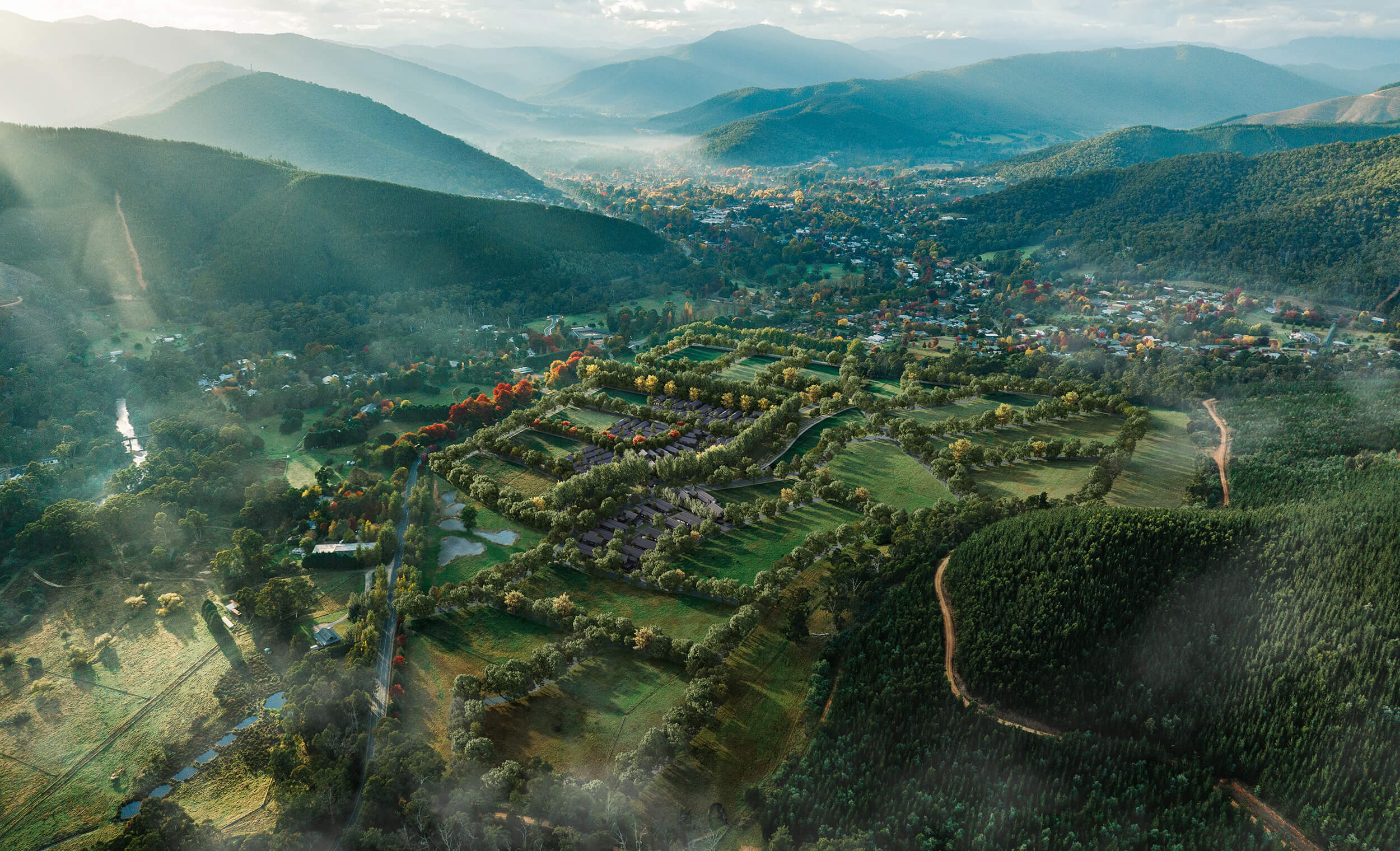
When we began Bright Valley, Deague Group set an ambitious brief: create a best-practice, sustainable alpine community where the public realm does the heavy lifting in shaping identity, lifestyle and environmental performance. Now that Stage One is taking shape, it’s remarkable to see those ideas materialising exactly as intended. The integrated shared pathways, the monocline alignment through the valley, the water-sensitive wetlands, and the recreational elements all express that original vision of a connected and contemporary alpine village. These spaces aren’t just amenities; they’re the framework that stitches the community together and anchors it in the landscape. What’s most satisfying is seeing how strongly the market has responded. The success of Stage One reflects that people value places where sustainable design, active living and a distinct alpine character all come together seamlessly. Watching the public realm take form confirms that the early design decisions were the right ones, and it’s exciting to see the foundations laid for a vibrant, resilient community that aligns perfectly with Deague Group’s aspirations.
Let’s talk about the public realm. What was your brief from Deague Group? What did they want to achieve?
When we began Bright Valley, Deague Group set an ambitious brief: create a best-practice, sustainable alpine community where the public realm does the heavy lifting in shaping identity, lifestyle and environmental performance. Now that Stage One is taking shape, it’s remarkable to see those ideas materialising exactly as intended.
The integrated shared pathways, the monocline alignment through the valley, the water-sensitive wetlands, and the recreational elements all express that original vision of a connected and contemporary alpine village. These spaces aren’t just amenities; they’re the framework that stitches the community together and anchors it in the landscape.
What’s most satisfying is seeing how strongly the market has responded. The success of Stage One reflects that people value places where sustainable design, active living and a distinct alpine character all come together seamlessly. Watching the public realm take form confirms that the early design decisions were the right ones, and it’s exciting to see the foundations laid for a vibrant, resilient community that aligns perfectly with Deague Group’s aspirations.
 1 / 1
1 / 1
As you said, it was an ambitious brief. How did you respond? What was your vision?
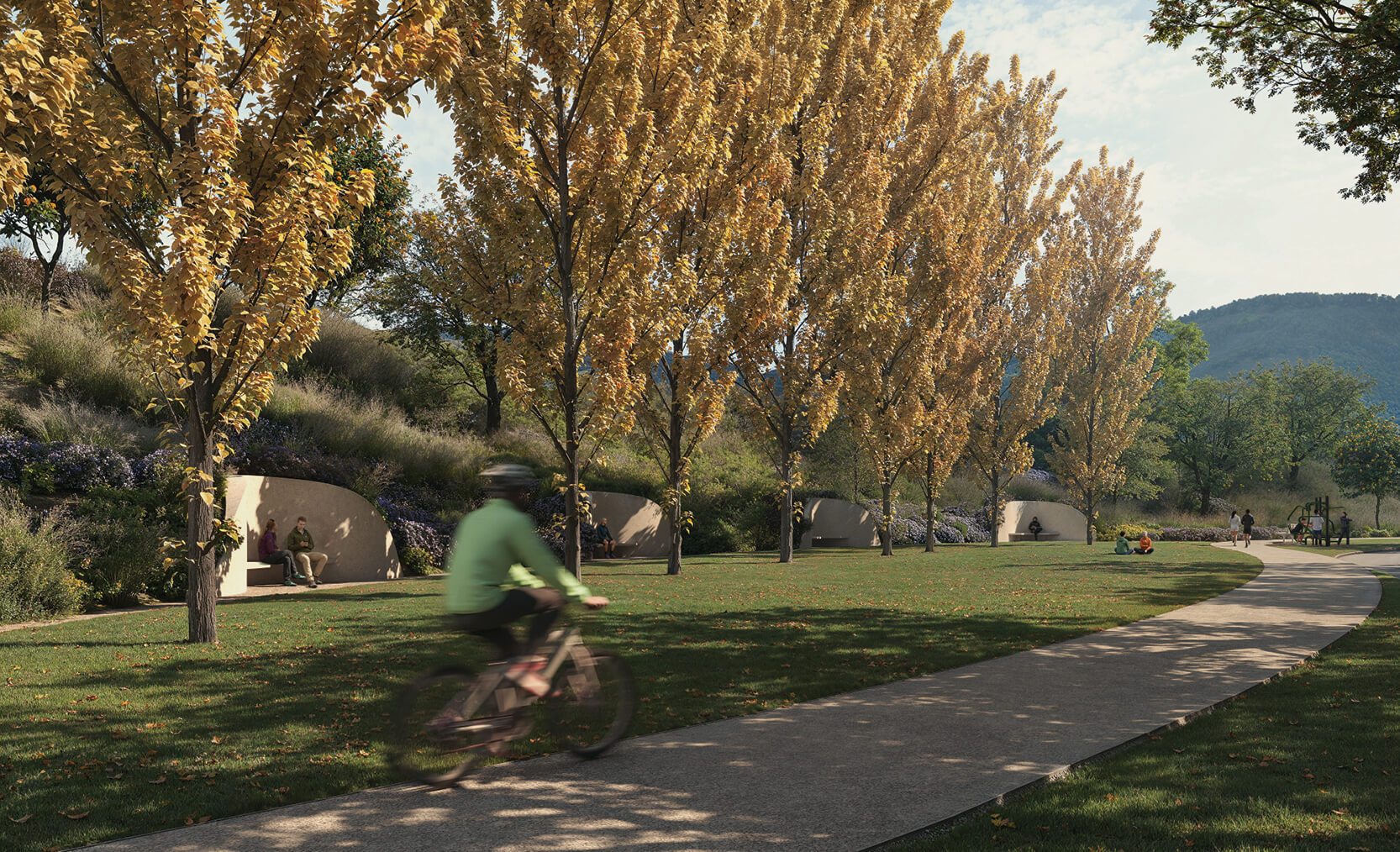
My vision for Bright Valley has always been to create a landscape we can all be proud of. Something enduring, memorable and, hopefully, award-winning in years to come. From the outset, I wanted the landscape to build on the beauty that already defines Bright. The existing oaks, poplars and elms at the town’s entry set a spectacular autumn tone, and our design leans into that seasonal character to create a seamless transition between the established township and this new community. The public realm is where that vision truly comes to life. By stitching together playgrounds, lookouts, shared pathways, informal amphitheatres, fitness stations and generous open spaces, we’ve aimed to create a place where families can live, explore and connect every day. It’s about crafting a community that feels authentically alpine, but also forward-looking; grounded in sustainability, enriched by nature, and designed for active, healthy living.
As you said, it was an ambitious brief. How did you respond? What was your vision?
My vision for Bright Valley has always been to create a landscape we can all be proud of. Something enduring, memorable and, hopefully, award-winning in years to come. From the outset, I wanted the landscape to build on the beauty that already defines Bright. The existing oaks, poplars and elms at the town’s entry set a spectacular autumn tone, and our design leans into that seasonal character to create a seamless transition between the established township and this new community.
The public realm is where that vision truly comes to life. By stitching together playgrounds, lookouts, shared pathways, informal amphitheatres, fitness stations and generous open spaces, we’ve aimed to create a place where families can live, explore and connect every day. It’s about crafting a community that feels authentically alpine, but also forward-looking; grounded in sustainability, enriched by nature, and designed for active, healthy living.
 1 / 1
1 / 1
The key feature is called a “monocline” – can you talk us through what that is?
The monocline is an existing landform that stretches for over 500 metres across the site, combining a continuous embankment with a relatively flat base, perfectly suited to passive and active recreation. Rather than altering it, we’ve used this natural form as the foundation for the Bright Valley linear reserve, where shared pathways, play areas and community spaces unfold along its length. The embankment creates elevated vantage points and lookouts with panoramic views across Bright Valley and towards the tree-lined boulevard into town, while the flat terrain below provides flexible, usable space for everyday activity. By building on the monocline’s unique structure, the design remains authentic to the site and deeply connected to Bright’s landscape character.
Let’s talk about some of the key features of the outdoor space, starting with the amphitheatre.
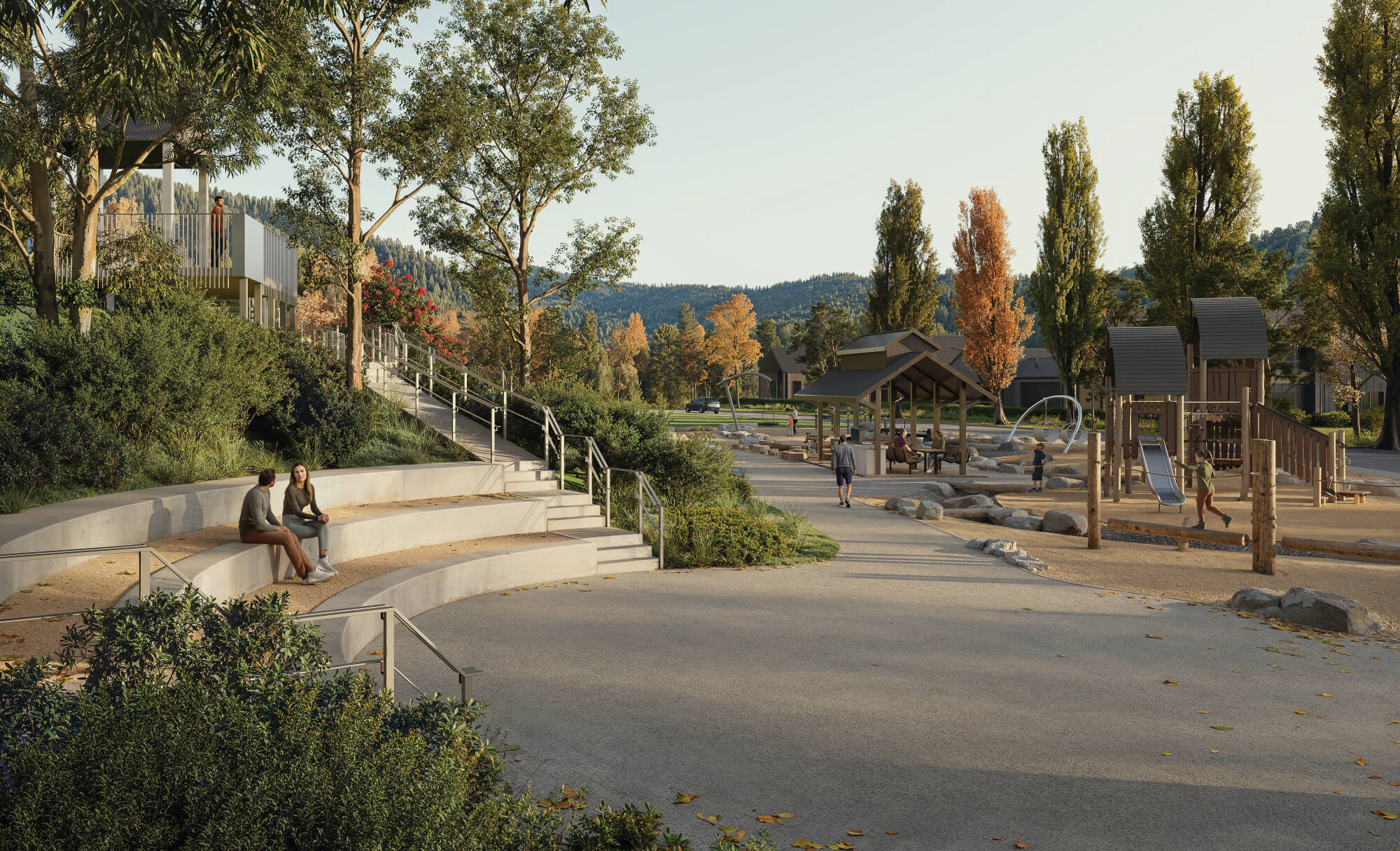
The amphitheatre was conceived as a key public-realm feature within the monocline, taking advantage of the site’s existing embankment to create a natural performance and gathering space for the community. Rather than imposing a constructed form, the design responds directly to the surveyed landform, using the slope to shape informal tiered seating and a flexible lawn area that can host events, small performances or day-to-day social activity. Careful consideration was given to how the amphitheatre would be experienced from within the estate, both up close and in longer views across the monocline corridor. By working with the existing topography, the space feels embedded in the landscape, offering a visually cohesive focal point that complements the surrounding pathways, play areas and open-space network. The result is a meeting place that feels both intentional and organic. It’s an anchor for community life that reinforces the project’s vision for a connected, contemporary alpine neighbourhood.
The key feature is called a “monocline” – can you talk us through what that is?
The monocline is an existing landform that stretches for over 500 metres across the site, combining a continuous embankment with a relatively flat base, perfectly suited to passive and active recreation. Rather than altering it, we’ve used this natural form as the foundation for the Bright Valley linear reserve, where shared pathways, play areas and community spaces unfold along its length.
The embankment creates elevated vantage points and lookouts with panoramic views across Bright Valley and towards the tree-lined boulevard into town, while the flat terrain below provides flexible, usable space for everyday activity. By building on the monocline’s unique structure, the design remains authentic to the site and deeply connected to Bright’s landscape character.
Let’s talk about some of the key features of the outdoor space, starting with the amphitheatre.
The amphitheatre was conceived as a key public-realm feature within the monocline, taking advantage of the site’s existing embankment to create a natural performance and gathering space for the community. Rather than imposing a constructed form, the design responds directly to the surveyed landform, using the slope to shape informal tiered seating and a flexible lawn area that can host events, small performances or day-to-day social activity.
Careful consideration was given to how the amphitheatre would be experienced from within the estate, both up close and in longer views across the monocline corridor. By working with the existing topography, the space feels embedded in the landscape, offering a visually cohesive focal point that complements the surrounding pathways, play areas and open-space network. The result is a meeting place that feels both intentional and organic. It’s an anchor for community life that reinforces the project’s vision for a connected, contemporary alpine neighbourhood.
 1 / 1
1 / 1
We know many new residents are keen cyclists. What can you tell us about the bike trails?
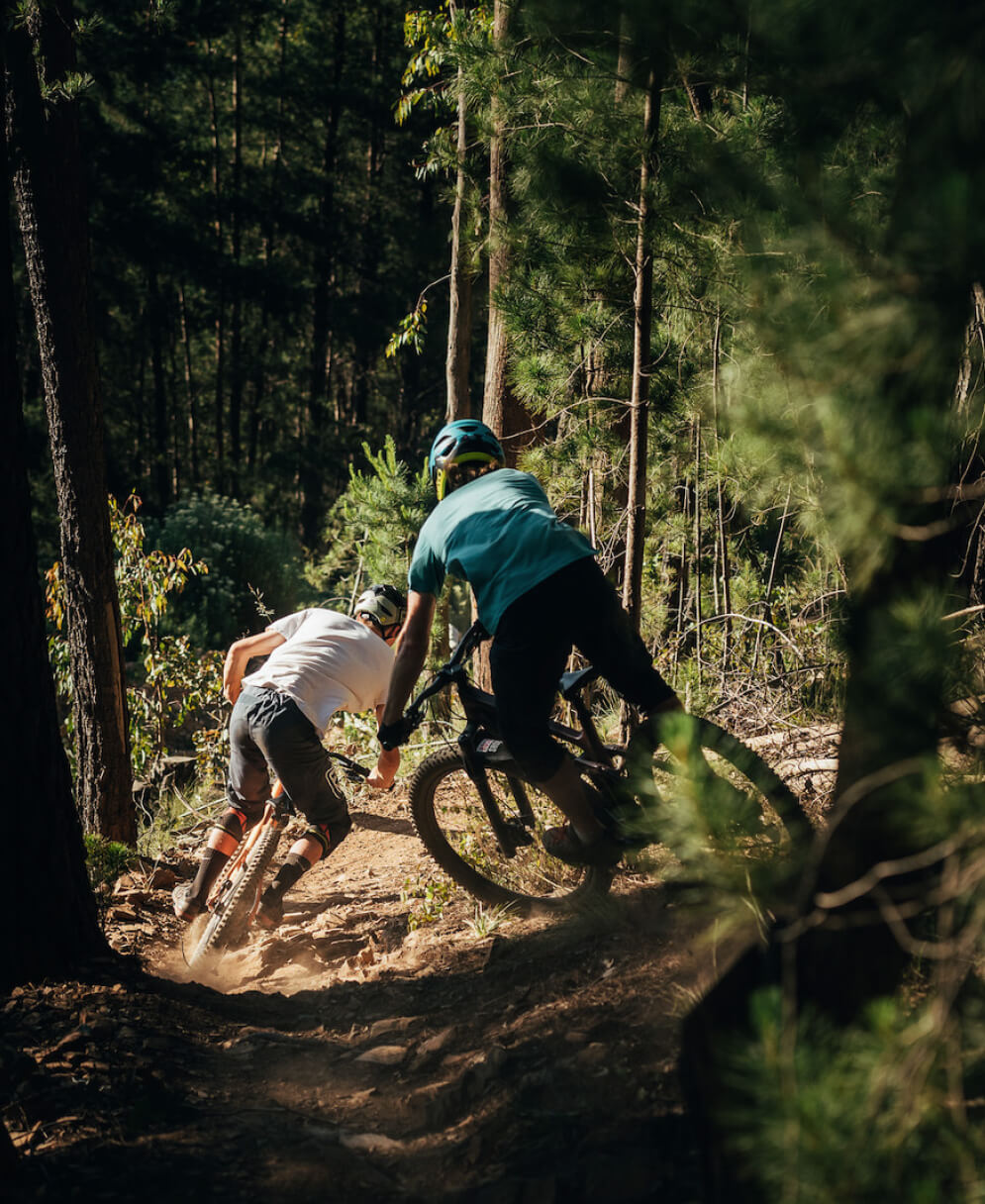
Through clever urban design, the bike trails are seamlessly connected with the broader network of community open spaces throughout Bright Valley. This integrated movement network links parks, reserves, play spaces and possibly an informal pump track, creating an intuitive and accessible way for residents to explore the landscape. It encourages an active, healthy lifestyle while strengthening social connections, making it easy for families to walk, ride and spend time outdoors together.
Bright is a very outdoorsy place to live, even in winter. Tell us about some of the spaces you’ve designed for picnics and gathering outside.
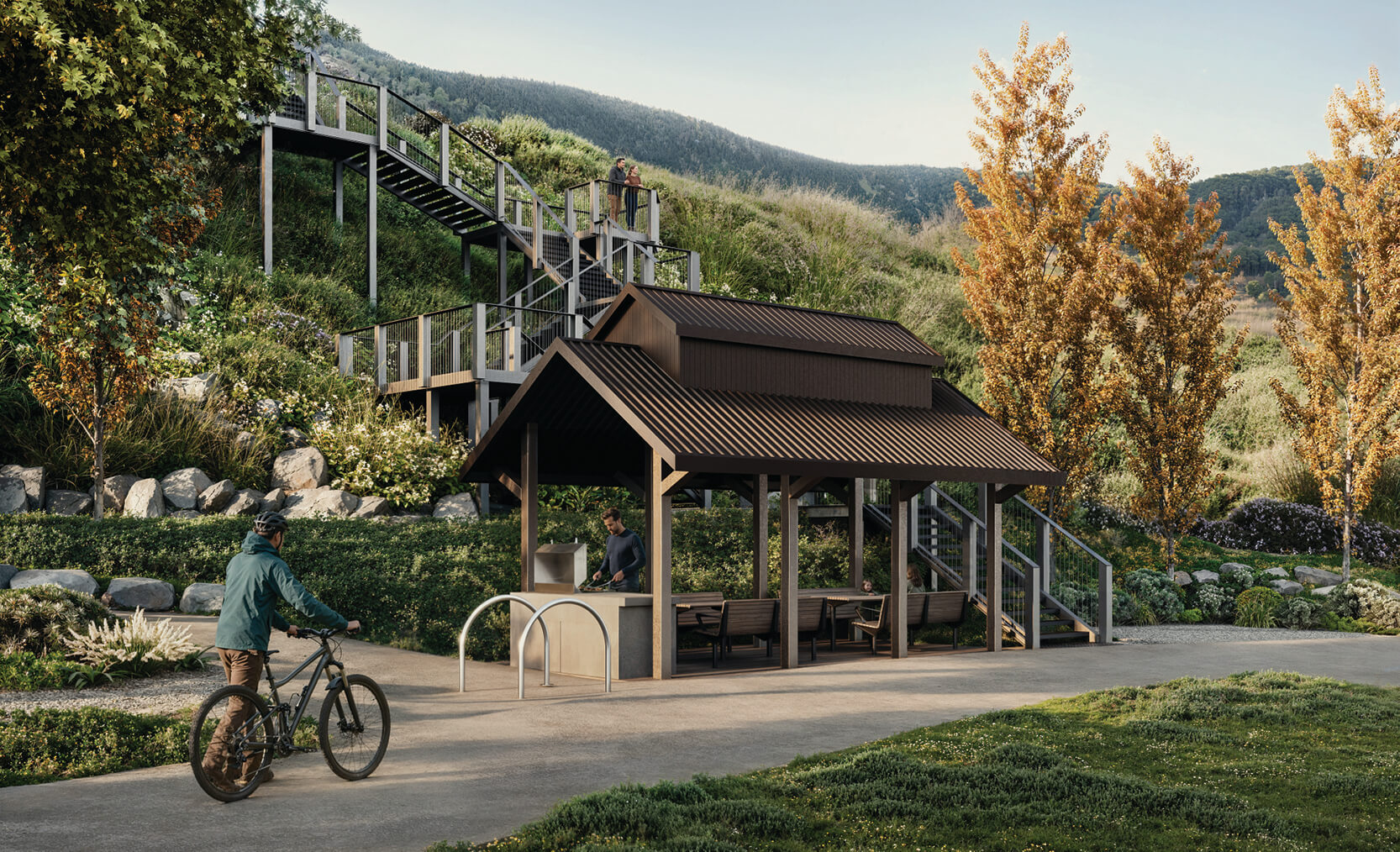
The monocline and the surrounding parks and reserves have been designed to offer more than just open space. They provide places for families and friends to gather, pause and enjoy the landscape. The inclusion of picnic and barbecue facilities, water fountains and generous shade structures reflects our focus on health and wellbeing as essential components of good landscape architecture. These features have been carefully positioned to sit comfortably within the natural setting while supporting everyday use. The renders illustrate how these spaces are integrated into the broader public-realm network, ensuring they are easily accessible from shared pathways, play areas and the wider estate. By creating welcoming, comfortable and well-equipped places to stop and spend time, we’re reinforcing a strong sense of community and encouraging residents to make the most of the outdoor environment.
We know many new residents are keen cyclists. What can you tell us about the bike trails?
Through clever urban design, the bike trails are seamlessly connected with the broader network of community open spaces throughout Bright Valley. This integrated movement network links parks, reserves, play spaces and possibly an informal pump track, creating an intuitive and accessible way for residents to explore the landscape. It encourages an active, healthy lifestyle while strengthening social connections, making it easy for families to walk, ride and spend time outdoors together.
Bright is a very outdoorsy place to live, even in winter. Tell us about some of the spaces you’ve designed for picnics and gathering outside.
The monocline and the surrounding parks and reserves have been designed to offer more than just open space. They provide places for families and friends to gather, pause and enjoy the landscape. The inclusion of picnic and barbecue facilities, water fountains and generous shade structures reflects our focus on health and wellbeing as essential components of good landscape architecture.
These features have been carefully positioned to sit comfortably within the natural setting while supporting everyday use. The renders illustrate how these spaces are integrated into the broader public-realm network, ensuring they are easily accessible from shared pathways, play areas and the wider estate. By creating welcoming, comfortable and well-equipped places to stop and spend time, we’re reinforcing a strong sense of community and encouraging residents to make the most of the outdoor environment.
 1 / 1
1 / 1
Speaking of making the most of the outdoors, can you walk us through the fitness elements?
Sure, as I’ve mentioned, the health and wellbeing of residents have been a key consideration in our landscape design. Providing shade, opportunities for exercise and a variety of places to gather are all fundamental principles of good design. We’re fortunate that Deague Group supported this vision with a generous budget, allowing us to deliver high-quality spaces that genuinely enhance everyday life. Across the monocline and the broader estate, informal passive and active recreation has been woven like a continuous ribbon; connecting playgrounds, fitness stations, walking and cycling paths, picnic areas and shaded resting points. The visualisations show how these elements come together to create a landscape that encourages people to be outside, to move, and to connect with each other. It’s a thoughtful balance of comfort, activity and community-building that will define the character of Bright Valley for years to come.
Speaking of making the most of the outdoors, can you walk us through the fitness elements?
Sure, as I’ve mentioned, the health and wellbeing of residents have been a key consideration in our landscape design. Providing shade, opportunities for exercise and a variety of places to gather are all fundamental principles of good design. We’re fortunate that Deague Group supported this vision with a generous budget, allowing us to deliver high-quality spaces that genuinely enhance everyday life.
Across the monocline and the broader estate, informal passive and active recreation has been woven like a continuous ribbon; connecting playgrounds, fitness stations, walking and cycling paths, picnic areas and shaded resting points. The visualisations show how these elements come together to create a landscape that encourages people to be outside, to move, and to connect with each other. It’s a thoughtful balance of comfort, activity and community-building that will define the character of Bright Valley for years to come.
 1 / 1
1 / 1
Bright is very well known for its leafy character. Can you tell us how you’ve incorporated trees and other plantlife into the masterplan?
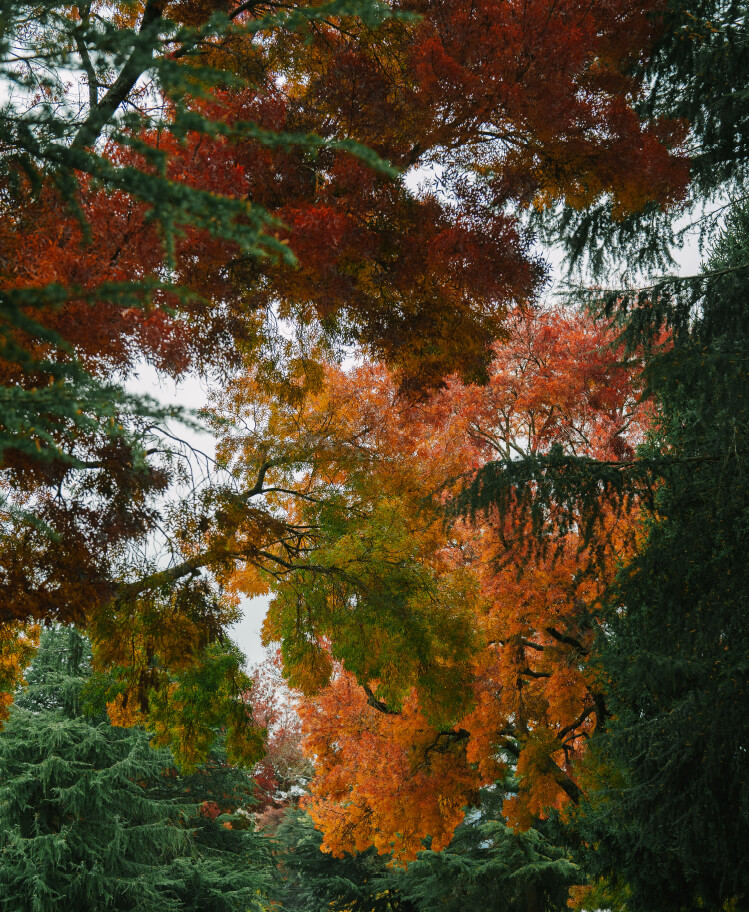
The proposed planting palette plays a major role in shaping the character of Bright Valley. Deciduous trees are used strategically throughout the public realm to create a spectacular autumn display that mirrors the established canopy at the entry to Bright. Within the reserves, the palette shifts to predominantly native and indigenous species, ensuring the landscape feels authentic, resilient, and ecologically grounded. The entry walls and park structures have been stylised to reference traditional tobacco kilns, drawing on the region’s history while using local rock and warm timber tones to blend seamlessly with the surrounding environment. These material choices help anchor the project in place and create an immediate sense of familiarity and belonging. Groundcovers will provide subtle seasonal interest, with white flowering species forming soft drifts that resemble snow, reinforcing the alpine character in a gentle, almost playful way. Together, these planting and material strategies tie the project back to its setting, ensuring that every space feels connected to the broader Bright landscape and its distinctive seasonal rhythms.
Last question, which feature are you personally excited to see come to life?
The feature I’m most excited to see come to life is the slide play space. Here, the ski runs have been interpreted in the slides themselves, cleverly using the embankment of the monocline to create an immersive, playful experience. Watching children enjoy this space in the future, exploring, sliding and engaging with the landscape, will be the moment I know my vision has truly been realised.
Bright is very well known for its leafy character. Can you tell us how you’ve incorporated trees and other plantlife into the masterplan?
The proposed planting palette plays a major role in shaping the character of Bright Valley. Deciduous trees are used strategically throughout the public realm to create a spectacular autumn display that mirrors the established canopy at the entry to Bright. Within the reserves, the palette shifts to predominantly native and indigenous species, ensuring the landscape feels authentic, resilient, and ecologically grounded.
The entry walls and park structures have been stylised to reference traditional tobacco kilns, drawing on the region’s history while using local rock and warm timber tones to blend seamlessly with the surrounding environment. These material choices help anchor the project in place and create an immediate sense of familiarity and belonging.
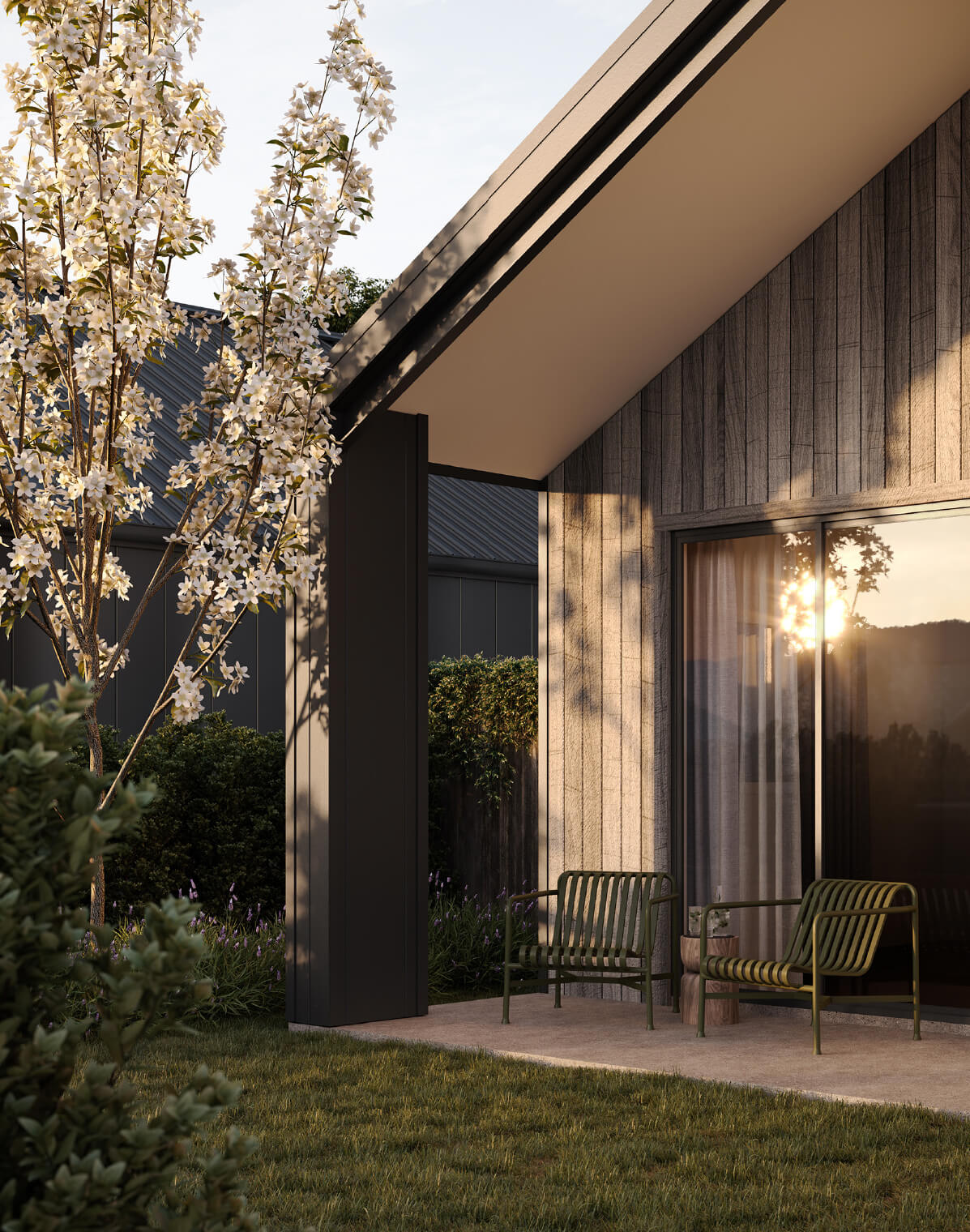
Groundcovers will provide subtle seasonal interest, with white flowering species forming soft drifts that resemble snow, reinforcing the alpine character in a gentle, almost playful way. Together, these planting and material strategies tie the project back to its setting, ensuring that every space feels connected to the broader Bright landscape and its distinctive seasonal rhythms.
Last question, which feature are you personally excited to see come to life?
The feature I’m most excited to see come to life is the slide play space. Here, the ski runs have been interpreted in the slides themselves, cleverly using the embankment of the monocline to create an immersive, playful experience. Watching children enjoy this space in the future, exploring, sliding and engaging with the landscape, will be the moment I know my vision has truly been realised.